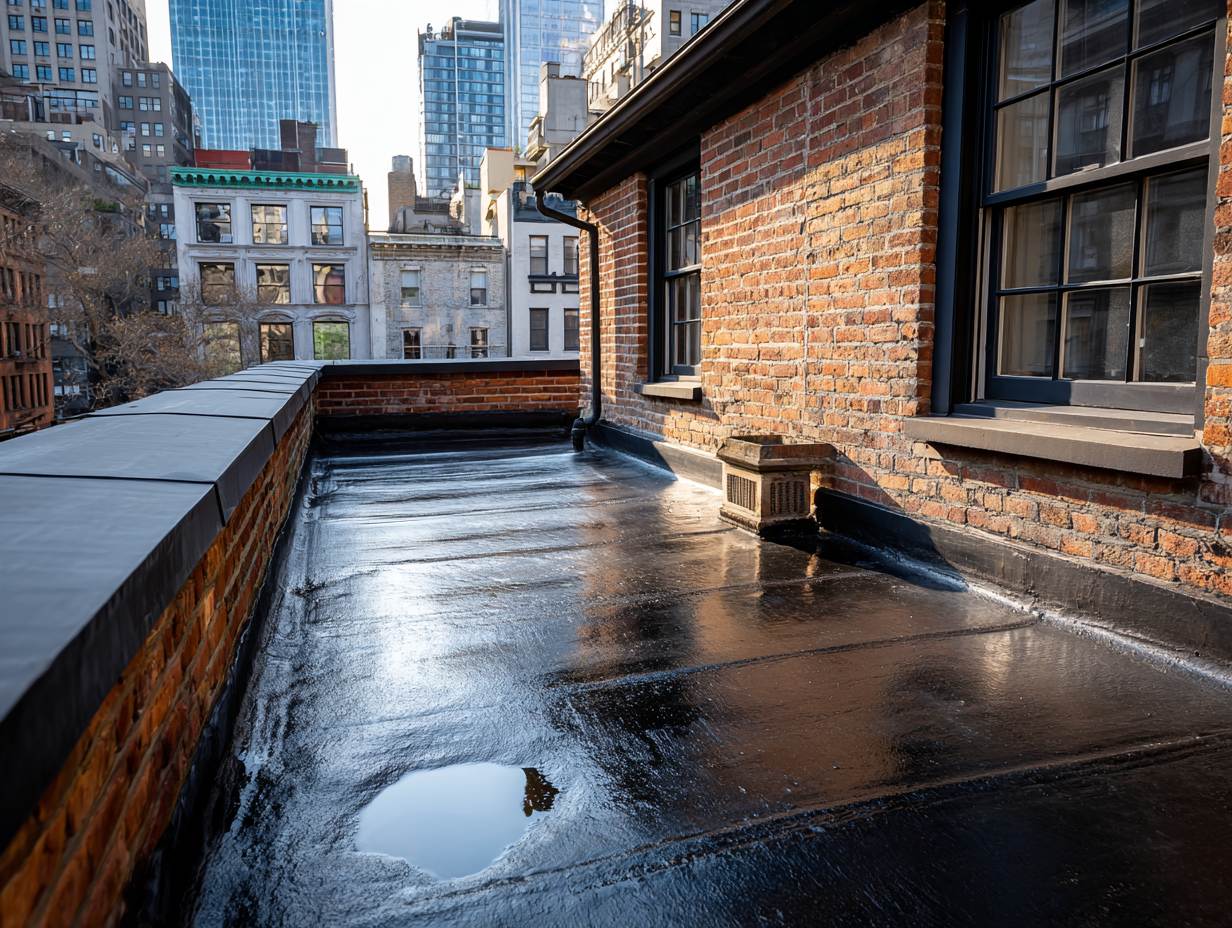
A flat roof usually gives warnings before it fails outright, but owners rarely see them, because nobody looks at a flat roof unless it's leaking. Many Newark owners can see their roof, or a neighbor's, from a top-floor window or a rear stairwell. Others only find out from the ceiling below. This checklist covers the signs worth noticing from both places, without going up on the roof yourself.
From Inside the Building
- Stains on the top-floor ceiling, especially ones that grow after each rain
- Stains or peeling paint high on outside walls, often a parapet or flashing problem
- A musty smell or damp patch in the top-floor unit
- Cracks or sagging in the top-floor ceiling, a sign water or weight is sitting above it
- Higher heating or cooling bills, which can mean wet insulation under the membrane
- Tenant reports of drips that come and go with the weather
From a Window or the Ground
| What you see | What it can mean |
|---|---|
| Puddles that stay days after rain | Ponding: blocked drains, a sagging deck or poor slope |
| Bubbles or blisters in the membrane | Moisture or air trapped underneath |
| Seams lifting at the edges or overlaps | Adhesive failing; water can get under |
| Membrane pulled away from the parapet | Shrinkage or failed base flashing |
| Cracks in the surface (modified bitumen, built-up) | Aging and UV wear |
| Bare spots where granules or gravel are gone | The protective surface has worn off |
| Vegetation, moss or debris piles | Standing water and blocked drainage |
| Rust streaks below scuppers or downspouts | Failing drainage metal |
Ponding: The Big One
Water that stays on a flat roof for more than a day or two after rain is the clearest warning sign. It speeds up wear, finds seams and adds weight. Sometimes the fix is as simple as clearing a drain or scupper. Other times the deck has sagged or the roof was re-covered without correcting the slope, and the fix involves tapered insulation or replacement.
How Roofers Confirm It
A roofer will usually walk the roof, inspect seams, edges, drains and penetrations, and check the flashing at parapets. If wet insulation under the membrane is suspected, they may take a small core sample or use a moisture meter. Wet insulation is often what decides between repair and replacement. See repair or replace.
The Most Common Causes on Newark Roofs
- old EPDM shrinking and pulling at the edges
- seams on older rubber roofs letting go
- parapet base flashing failing or never turned up far enough
- clogged drains and scuppers from leaves and debris
- AC units, satellite mounts and other trades' holes in the membrane
- several old roofs stacked up, trapping moisture between layers
Don't Go Up to Check
Flat roofs feel safe to walk on, and they aren't. Edges may not have railings, old decks can be soft, wet membranes are slippery, and skylights can break underfoot. Look from a window, and leave the roof walk to a roofer.
A Seasonal Look
A simple routine catches most problems early:
| When | What to do (from the ground or a window) |
|---|---|
| Late fall | Have drains, scuppers and gutters cleared before winter |
| After big storms | Look for peeled edges, debris and water that isn't draining |
| Spring | Check top-floor ceilings and walls for new stains after the thaw |
| Summer | Notice blisters and seams lifting on hot, sunny days |
When to Call
Call a roofer when a stain appears or grows, when water sits on the roof more than a couple of days, when you see seams or edges lifting, or after any storm strong enough to leave debris in the yard. On a rental building, also call when a tenant reports a drip, even if you can't see anything yourself.
Questions
Is a small puddle on a flat roof normal?
A little water that dries within a day or two after rain is common. Water that stays longer, or always collects in the same place, is a sign to have the drainage checked.
Can blisters be repaired?
Small, isolated blisters can often be cut out and patched. Many blisters across the roof usually point to trapped moisture and possible replacement.
How often should a flat roof be checked?
Once a year and after big storms is a sensible habit, with drains cleared before winter.
Around Newark
Flat roofs on two- and three-families are everywhere in North Broadway, Dayton, East Orange and Harrison. Repairs and replacements: flat roofs.
Flat Roof Materials Compared: EPDM, TPO and Modified Bitumen
The three common membranes, side by side.
Repair or Replace? How Roofers Make the Call
The factors that tip a roof one way or the other.