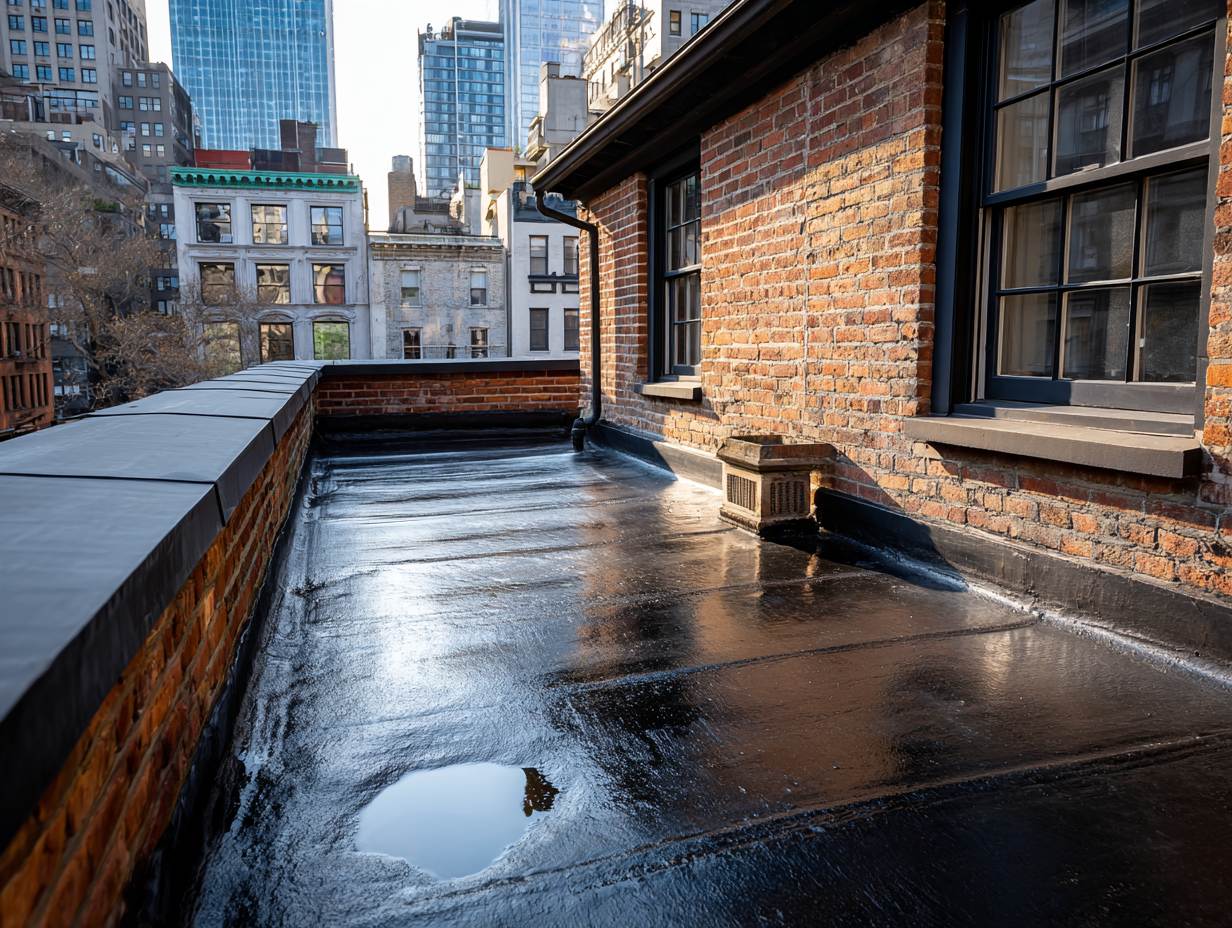
If you own a two- or three-family house, a rowhouse or a small apartment building in Newark, there's a good chance the roof is flat, and that it's one of three materials. When a roofer talks about repairing or replacing it, the choice of membrane comes up quickly. This guide explains the three in plain terms, plus the older systems you may find underneath. It doesn't rank them. The right choice depends on the building, the drainage, the budget and the roofer's experience with each.
The Three, Side by Side
| EPDM (rubber) | TPO | Modified bitumen | |
|---|---|---|---|
| What it is | A synthetic rubber sheet, usually black | A single-ply thermoplastic sheet, usually white | Asphalt-based rolls with reinforcement, often with a granule top |
| How seams are joined | Adhesive or tape | Hot-air welded | Torched, hot-mopped or self-adhered |
| Color and heat | Dark; absorbs heat | Light; reflects sun | Usually dark or granulated |
| Strengths | Flexible in cold; simple to patch; long track record | Strong welded seams; cooler top floor in summer | Tough surface; handles foot traffic; multi-layer |
| What to watch | Seams and edges; shrinkage at the perimeter on older installs | Product quality and installer skill vary | Torch work needs care near wood; seams and flashings age |
| Common on | Two- and three-family houses, rowhouses | Newer re-roofs, larger flat roofs | Older and newer flat roofs; areas with roof traffic |
EPDM in a Little More Detail
EPDM has been on Newark's flat roofs for decades. It comes in large sheets, so there are fewer seams. It stays flexible through freeze and thaw, and it's easy to patch when something punctures it. The weak points are where sheets join and where the membrane turns up a parapet or meets a drain. On older roofs the sheet can shrink and pull at the edges. Because it's black, it soaks up summer heat, which top-floor tenants notice.
TPO in a Little More Detail
TPO is a light-colored single-ply membrane whose seams are welded with hot air, so the seam becomes part of the sheet rather than glued to it. Its light color reflects sunlight, which can help keep a top floor cooler. Quality varies between products and depends heavily on the installer's welding. Ask how long the roofer has been installing it.
Modified Bitumen in a Little More Detail
Modified bitumen is the modern descendant of tar-and-gravel roofing: rolls of asphalt blended with polymers and reinforced with fabric, installed in one or two layers. Some are torch-applied, some hot-mopped, some self-adhering. It's tough and handles foot traffic well, which matters on roofs with AC units or a hatch that gets used. Torch-down work needs extra care on buildings with wood framing and old roof layers.
Older Systems You Might Find
- Built-up roof (tar and gravel): layers of felt and hot asphalt under gravel. Durable when maintained, but heavy, and leaks are hard to trace.
- Roll roofing: a cheap asphalt roll sometimes used on porches and small sections. It doesn't last long on a main roof.
- Coatings: liquid coatings over an existing roof can extend the life of a sound roof, but they don't fix a wet or failing one.
Many Newark flat roofs have more than one of these stacked up. The layers matter when it's time to replace.
What Matters More Than the Membrane
- Drainage: a roof that sheds water lasts longer than one that holds it. Taper, drains, scuppers and gutters come first.
- Flashing details: parapets, walls, curbs and penetrations are where most leaks start. See parapet walls and party walls.
- The deck and insulation: wet insulation or a soft deck under a new membrane shortens its life.
- The installer: every membrane fails early when installed badly.
Questions to Ask Before Choosing
- Which membranes do you install most often, and for how long?
- What happens at the parapets, drains and penetrations?
- Will the old roof and insulation come off, or stay?
- How will you correct any ponding?
- What documentation will I get for the system installed?
Questions
Which flat roof material is best?
None is best for every building. EPDM, TPO and modified bitumen each work well when installed properly on a roof that drains. The roofer's experience with the material and the building's drainage usually matter more than the label.
Can a new membrane go over the old one?
Sometimes, if the existing roof is dry and well attached and codes allow another layer. Wet insulation underneath, or too many layers already, means a tear-off. See flat roofs.
Does a white roof keep the top floor cooler?
A reflective roof absorbs less heat from the sun, which can help on hot days. How much difference it makes depends on insulation and ventilation.
Where These Roofs Are
Flat roofs are everywhere in the Ironbound, Kearny and Elizabeth.
Signs a Flat Roof Is Failing
What to look for from a top-floor window or after a rain.
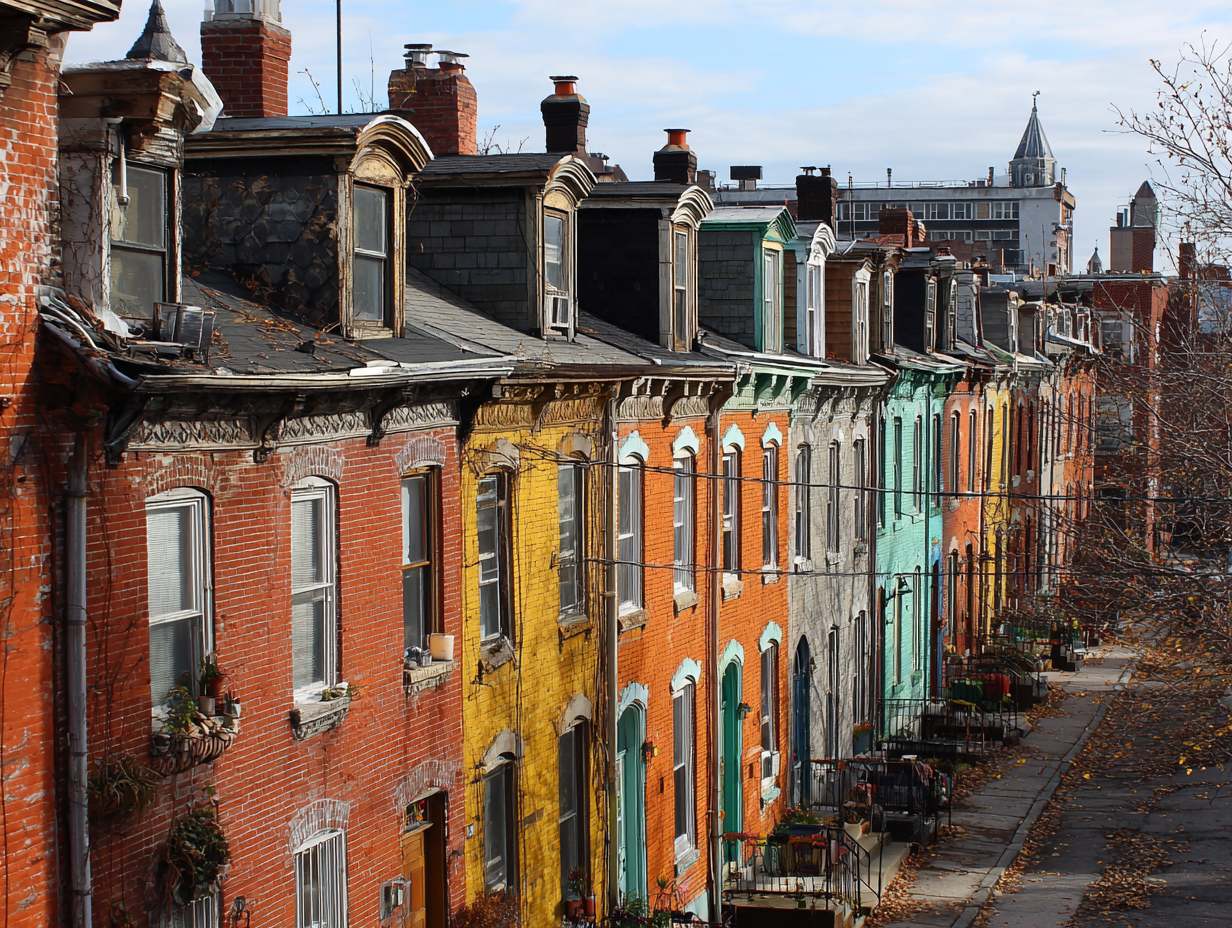
Parapet Walls and Party Walls: Where Rowhouse Roofs Leak
The joints that cause most top-floor leaks on attached buildings.