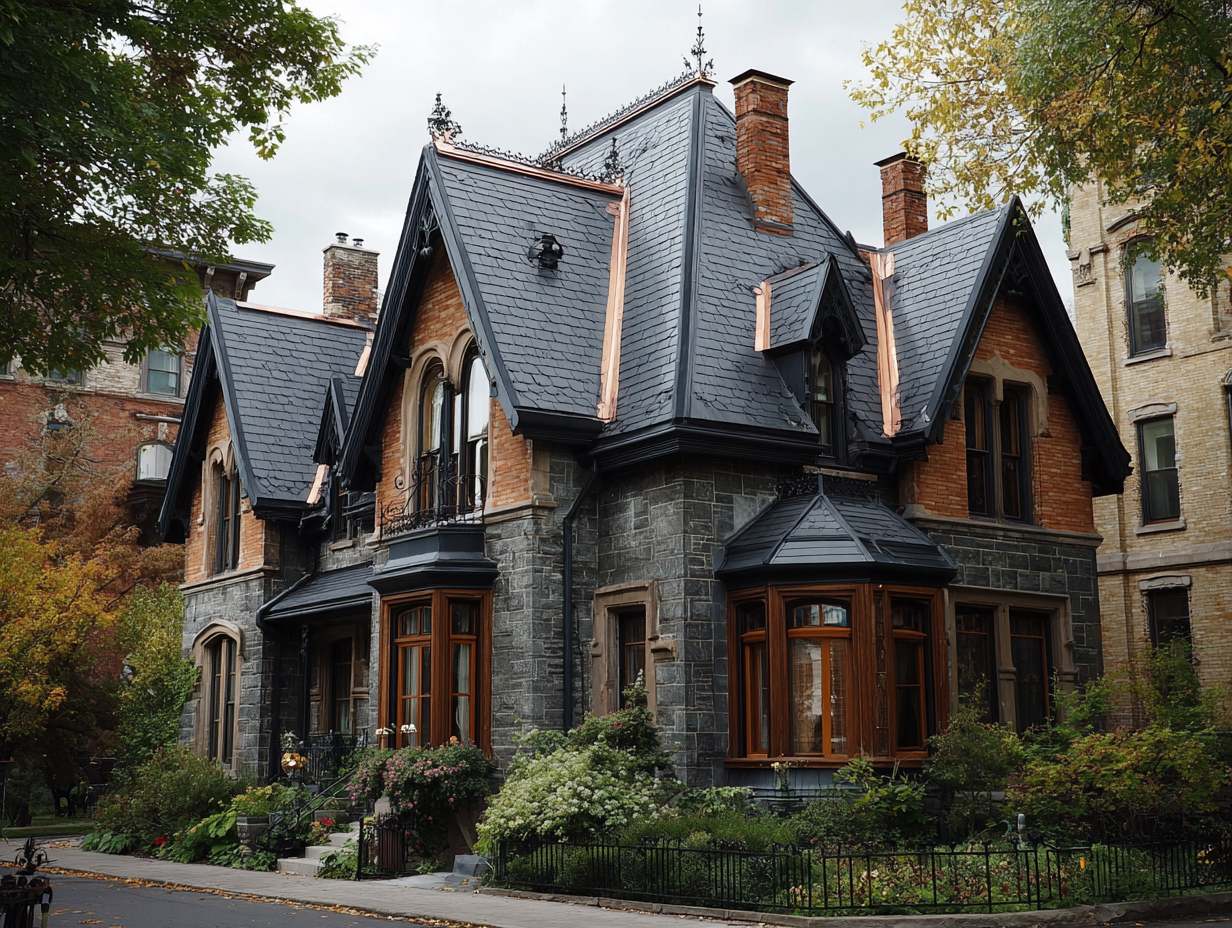
Why Slate Is Worth Saving
Slate is split stone, and good slate can last far longer than any asphalt shingle. Newark's older single-family neighborhoods, Forest Hill above all, have houses that still carry their original slate roofs from the late 1800s and early 1900s. When those roofs leak, the slate itself is rarely the problem. What wears out first is the nails that hold each slate, the flashing at valleys, chimneys and walls, and the occasional slate cracked by a falling limb or a misplaced foot. Slate roof repair replaces what's failed and keeps the rest.
What Fails First on a Slate Roof
| Part | What happens | The fix |
|---|---|---|
| Nails | Iron nails rust through, and slates slide out of place | Slates re-secured with copper nails or slate hooks |
| Individual slates | Cracked, broken or missing | Replaced with matching slate |
| Valleys | Copper, lead or older metal wears through where two slopes meet | New valley metal, with slates reset along it |
| Chimney and wall flashing | Step and counter-flashing pull away or corrode | New flashing, often copper |
| Ridge and hips | Ridge caps loosen | Re-set or replaced |
| Gutters | Built-in or hanging gutters overflow back under the slate | Gutter repair or relining |
Repair or Replace Slate?
Slate replacement is rarely needed when the stone itself is sound. A roofer who knows slate tests it: good slate rings when tapped and doesn't flake or crumble. If most of the slate is solid, the roof is repaired, flashings are renewed and slipped pieces re-secured. If the slate is soft, delaminating or failing across the roof, or the roof was patched for years with the wrong materials, replacement starts to make sense. Matching color and size matters. Salvaged slate is often used so repairs blend in.
Copper, Lead and Valleys
Older slate roofs usually came with metal that lasts nearly as long as the stone: copper or lead in the valleys, at chimneys and along walls. When that metal finally wears through, it's often replaced with copper, which ages to the familiar brown and green. Mixing metals or using tar to patch slate valleys tends to cause trouble. The repair should match the roof it's on. Chimney flashing on these houses also often needs attention to the masonry itself. See gutters, flashing & chimneys.
Slates sliding or showing up in the yard?
Get a roofer's eyes on it: (973) 528-8938.
Call (973) 528-8938Historic Districts and Older Homes
Forest Hill is home to the Forest Hill Historic District, listed on the state and national registers, and Newark has other designated historic districts and landmarks. In a locally designated district, work that changes what a building looks like from the street may need approval. Replacing slate with asphalt, for example, can raise questions that repairing slate with slate doesn't. Rules depend on the designation, so ask the contractor and check with the city before planning a material change. More: slate roofs in Forest Hill.
Is a Slate Roof Worth Repairing?
Usually, yes. If the slate is sound, repairing it and renewing the flashing costs far less over time than replacing it, and the roof keeps the look the house was built with. The main exceptions are slate that's soft or flaking across the roof, and roofs that were damaged by years of improper patching. A roofer experienced with slate can tell the difference on a first look.
Why Nobody Should Walk a Slate Roof
Slate is brittle underfoot and slippery when wet. Walking on it breaks slates and causes the very leaks owners are trying to stop. Slate roofers work from ladders, roof hooks and planks so their weight doesn't land on the stone. If someone offers to "go up and take a look" by walking across a slate roof, that's a sign they don't work with slate. Keep everyone else off it too.
Other Older Roofs
Slate isn't the only roof on Newark's older houses. Many have mansard fronts with decorative shingles, built-in gutters hidden in the cornice, tin or copper on porch roofs and bays, or several layers of asphalt over the original wood shingles. Each needs a roofer who recognizes it. Built-in gutters especially can look fine from the street while leaking into the wall below. If the house is more than a century old, mention that on the call.
Built-In Gutters on Older Houses
Many Victorian and early-1900s houses have gutters built into the cornice instead of hanging off the edge. They're lined with metal and look clean from the street, but when the lining cracks, water runs straight into the wall or the top-floor ceiling. Built-in gutter leaks are often mistaken for roof leaks. Relining them, usually with metal or a membrane, is a common repair on these houses.
Choosing a Roofer for Slate
Ask how often the contractor works on slate, what nails or hooks they use, how they get around on the roof without walking on it, where they find matching slate, and what metal they use for flashing. Ask to see slate repairs they've done. Slate is specialized work, and the right roofer will be glad to explain how they do it.
Insurance and Slate Roofs
When a storm damages a slate roof, insurers sometimes propose replacing the damaged area or the whole roof with a different material. Read what the policy says about matching and like-kind materials, and if the house is in a historic district, mention that to the adjuster. A roofer experienced with slate can document what's damaged and how it would be repaired in kind.
Slate and Older Roofs Around Newark
North
West
South
Downtown
Essex
- IrvingtonEssex County
- East OrangeEssex County
- OrangeEssex County
- BloomfieldEssex County
- BellevilleEssex County
- NutleyEssex County
Hudson
Union
Main page: roofing in Newark, NJ.