What "Emergency" Means Here
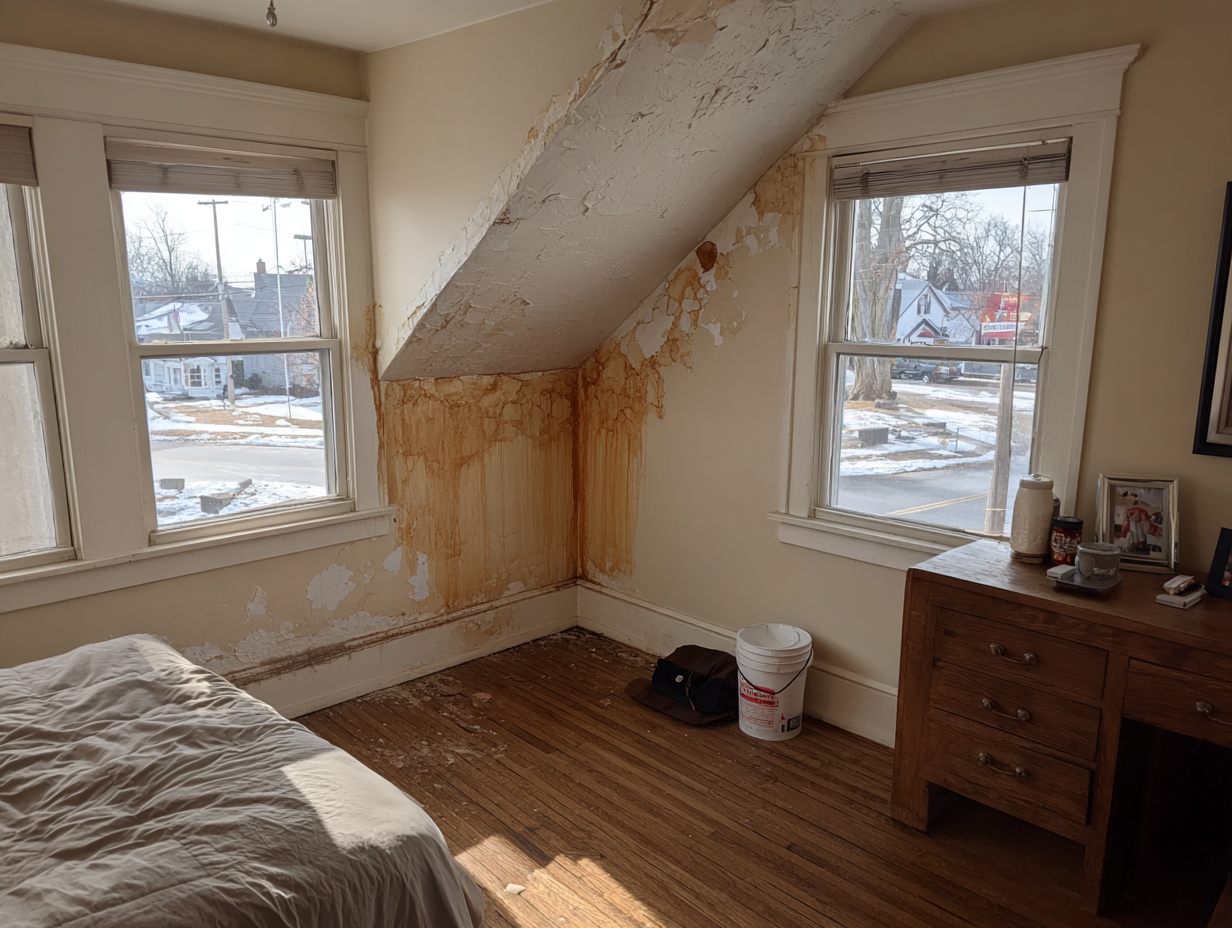
An emergency roof repair is about the leak, not a promise of timing: water is coming into the building now, or the roof has been opened up by wind or a falling limb. The first goal is to stop more water getting in. That usually means a temporary measure such as a tarp, a patch or a sealed opening, done by a roofer, followed by a proper repair once the weather allows. In Newark the usual causes are nor'easters, summer thunderstorms, wind that lifts shingles or peels back a flat-roof edge, limbs from street trees, and ice dams at the eaves in winter.
What to Do Safely While You Wait
- Stay off the roof and away from ladders, especially in wind, rain or ice.
- Keep clear of a sagging or bulging ceiling. Water collects above drywall and plaster and can bring it down.
- Catch the water with buckets and towels, and move furniture, electronics and belongings out of the way.
- Watch the electricity. If water is near a light fixture or outlet, switch that circuit off at the panel if you can safely reach it.
- Take photos and video of the ceiling, the damage and anything visible outside from the ground.
- If a tree or limb is on the roof or touching wires, stay away and call the utility.
If you rent, tell your landlord or building manager right away. Roof work is the owner's to arrange.
Tarps and Temporary Repairs
When the roof is opened up, a roofer will often secure a heavy tarp over the damaged area, or seal a flat-roof edge temporarily, to keep water out until a permanent repair can be made. A tarp is a short-term measure. It should be fastened so wind can't get under it, and it shouldn't stay on through a whole season. Ask the roofer when the permanent repair will follow and whether your insurer wants to see the damage before it's done.
Wind, Limbs and Ice
| Cause | What it does | Where it shows |
|---|---|---|
| Wind | Lifts and breaks shingles; peels flat-roof edges and flashing | Missing shingles in the yard; leaks at edges and walls |
| Fallen limbs | Punctures shingles and deck; crushes gutters | A hole or crushed area; a leak directly below |
| Wind-driven rain | Pushes water sideways under flashing | Leaks at chimneys, walls and windows that only happen in storms |
| Ice dams | Meltwater refreezes at the eaves and backs up under shingles | Stains along the top of outside walls in winter |
| Hail | Bruises shingles; dents metal | Often invisible from the ground |
More on the seasons: nor'easters, ice dams and winter leaks and summer storms, wind and fallen limbs.
Insurance, in Brief
Sudden damage from wind, hail or a falling tree is often covered by homeowners insurance. Wear, age and long-term leaks usually aren't. Photos taken before and after a temporary repair, the date of the storm, and the roofer's description of the damage all help a claim. Many insurers expect you to prevent further damage, which is what a tarp does. What your policy covers is decided by your insurer, not the roofer. Full walkthrough: roof claims in New Jersey.
A Word About Door-to-Door Storm Offers
After big storms, some operators go door to door offering quick roof work, sometimes asking for cash up front or a signature on the spot. New Jersey requires home improvement contractors to be registered with the Division of Consumer Affairs. Ask for the registration number, look it up, and read anything before you sign. A registered roofer will still be there tomorrow. More: how calls work.
Will Insurance Pay for a Storm-Damaged Roof?
Often, when the damage is sudden and the cause is covered (wind, hail, a falling tree), the insurer pays for the repair or the damaged section, minus the deductible. If the roof was already worn out, or the leak has been going on for a long time, coverage may be limited or denied. Call your insurer to open the claim, and keep photos and the roofer's notes.
After the Water Stops
Once the roof is closed, the inside still matters. Wet insulation in the attic, a soaked ceiling or water inside a wall needs to dry properly or be replaced, or the stain comes back. Ask the roofer what they saw underneath, and keep an eye on ceilings below the repair for a few weeks. Then make sure the permanent repair is done, not just the tarp.
Storm Damage on Flat Roofs
On a flat roof, wind usually attacks the edges. It gets under loose edge metal or a membrane that isn't fully adhered and peels it back, sometimes a few feet, sometimes across a whole section. Heavy rain then overwhelms drains already half-blocked by leaves. Hail and falling limbs puncture the membrane. From the street, storm damage on a flat roof is often invisible, which is why a top-floor leak after a storm is worth a call even if the roof looks fine from below.
Ice Dam Leaks in the Middle of Winter
Ice dam leaks are confusing because they happen on dry, cold days, not during a storm. Snow melts on the upper roof, the water runs down to the cold eave, refreezes and backs up under the shingles. The stain shows at the top of an outside wall or around a top-floor window. Don't chip at the ice or climb up to clear it. A roofer can deal with the immediate leak, and the long-term fix usually involves attic insulation, ventilation and ice barrier under the roofing.
Storm Repairs Around Newark
North
West
South
Downtown
Essex
- IrvingtonEssex County
- East OrangeEssex County
- OrangeEssex County
- BloomfieldEssex County
- BellevilleEssex County
- NutleyEssex County
Hudson
Union
Main page: roofing in Newark, NJ.