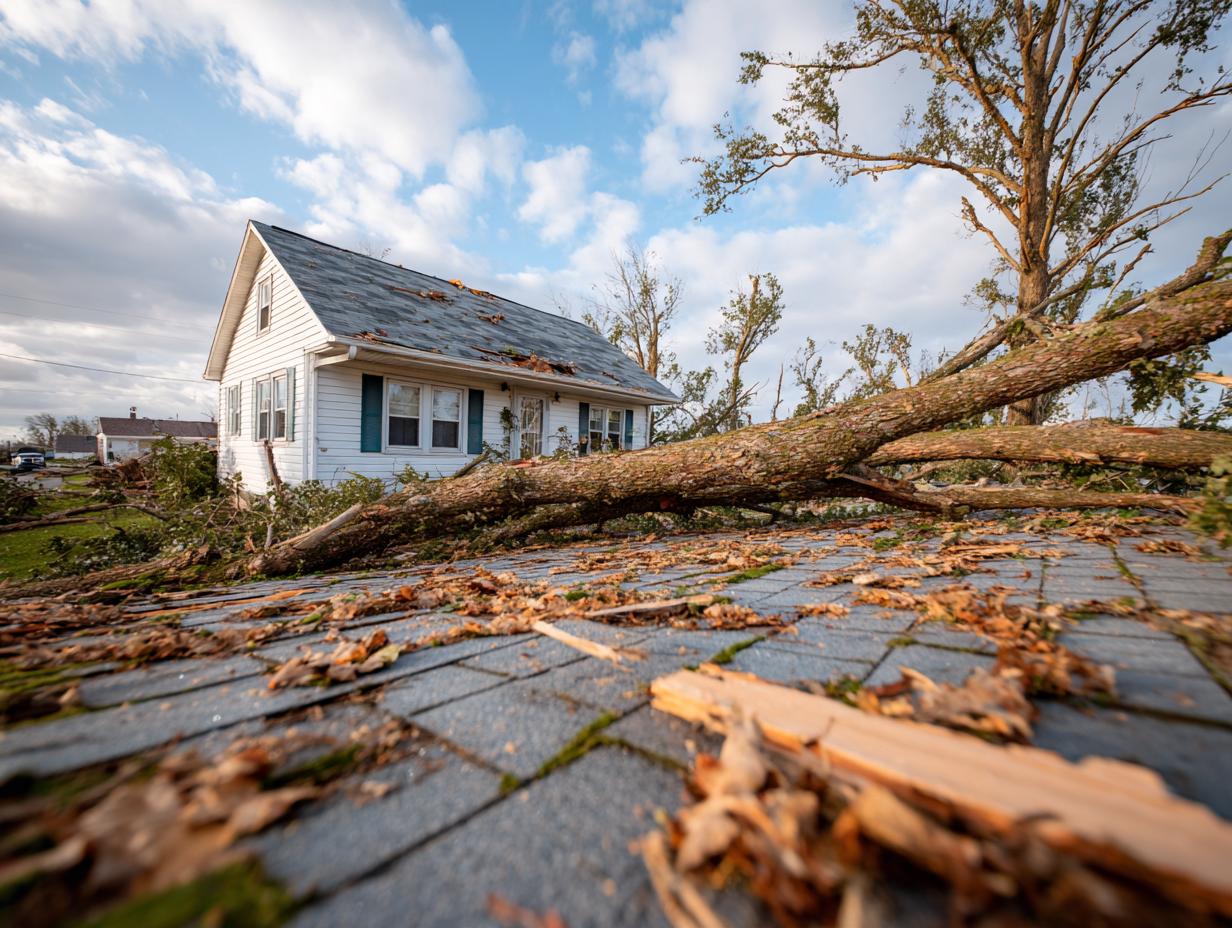
Newark's summers bring heat, humidity and fast-moving thunderstorms, and some years the remnants of tropical storms push through with heavy rain and strong wind. Roofs take the brunt of it. Wind lifts shingles and peels flat-roof edges, hail bruises roofing, and street trees drop limbs onto houses. This guide covers what summer storms do to roofs and how owners can stay safe and get the damage handled.
What Each Storm Does
| Storm effect | What happens to the roof | What you might notice |
|---|---|---|
| Strong gusts | Shingle tabs lift and break their seal; flat-roof edges and edge metal peel | Shingles in the yard; flapping metal at the edge |
| Downbursts | Short, intense wind that can damage a section of roof | Damage on one side only |
| Heavy rain | Overwhelms gutters, drains and scuppers | Water over the gutter; leaks near walls |
| Hail | Bruises shingles, knocks off granules, dents metal | Often invisible from the ground |
| Lightning-felled or wind-broken limbs | Punctures roofing and deck; crushes gutters | A limb on the roof; a leak directly below |
Heat on Flat Roofs
Summer heat is its own kind of wear. Dark flat roofs get very hot in direct sun, and membranes expand and contract daily. Seams and flashings take the stress. That's one reason older flat roofs often fail at the seams first, and why reflective membranes are sometimes chosen on replacement. See flat roof materials compared.
Trees Over Roofs
Many Newark streets are lined with mature trees, and many backyards have trees that have grown over the roof. Limbs that overhang a roof scrape shingles in wind, drop leaves into gutters and can break in a storm. Keeping branches trimmed back from the roof reduces all three. Never trim near power lines or from a ladder; branches near wires are the utility's to handle.
A limb on the roof after the storm?
Get the leak in front of a roofer: (973) 528-8938.
Call (973) 528-8938After a Storm: Safe Steps
- Stay away from downed wires and anything touching them; call the utility.
- Stay off the roof and ladders. Look from the ground or a window.
- Inside, catch drips and move belongings. Keep clear of any sagging ceiling.
- Photograph the roof from the ground, debris in the yard and any interior damage, with the date.
- Get a roofer to secure the opening with a tarp or temporary patch if the roof was opened up.
- Call your insurer if the damage looks significant. See roof claims in New Jersey.
Damage That Doesn't Show Right Away
Wind can break the seal on shingles without blowing them off, so they lift in the next storm. Hail can bruise shingles in ways only visible up close. A limb can crack the deck under shingles that look intact. If a big storm went through, it's reasonable to have the roof looked at even if nothing is leaking yet, especially on older roofs.
Door-to-Door Offers After Storms
After a major storm, some operators go door to door offering immediate roof work. New Jersey requires home improvement contractors to register with the Division of Consumer Affairs. Ask for the registration number and look it up, get a written contract, and avoid large cash deposits. More: how calls work.
Heat, Humidity and Attics
Summer heat also builds up in attics and under top-floor ceilings. A poorly ventilated attic bakes shingles from below and shortens their life, and in winter the same attic helps ice dams form. When a roof is replaced, ask whether the attic ventilation is adequate. Ridge vents, soffit vents and properly sized exhaust vents can protect the new roof for years.
Gutters in Summer Downpours
Summer thunderstorms can drop a lot of rain in a short time. Gutters that handle ordinary rain fine can overflow in a downpour, especially if they're partly clogged or undersized. Water spilling over the gutter runs down the wall and can come in around windows or into a basement. If gutters overflow every heavy storm, ask a roofer about size, slope and downspout placement.
Questions
Will a roof that survived the storm be fine?
Probably, but not certainly. Lifted shingles, bruised roofing or a cracked deck may not leak until the next storm. An older roof is worth a look after a big wind event.
Is hail common in Newark?
Hail is less common here than in some parts of the country, but summer thunderstorms do produce it. It's worth mentioning to a roofer if you saw it.
Many policies cover removal when a fallen tree damaged the house. Check your policy, then have a roofer secure and repair the roof.
Around Newark
Wind and trees are a big part of roof calls near Weequahic Park, in Dayton and in Belleville. The repair side: leaks & storm damage.
Roof Claims in New Jersey After Wind and Storms
How a storm roof claim usually works, step by step.
Nor'easters, Ice Dams and Winter Roof Leaks
What winter does to roofs, and why the leak shows up in March.