
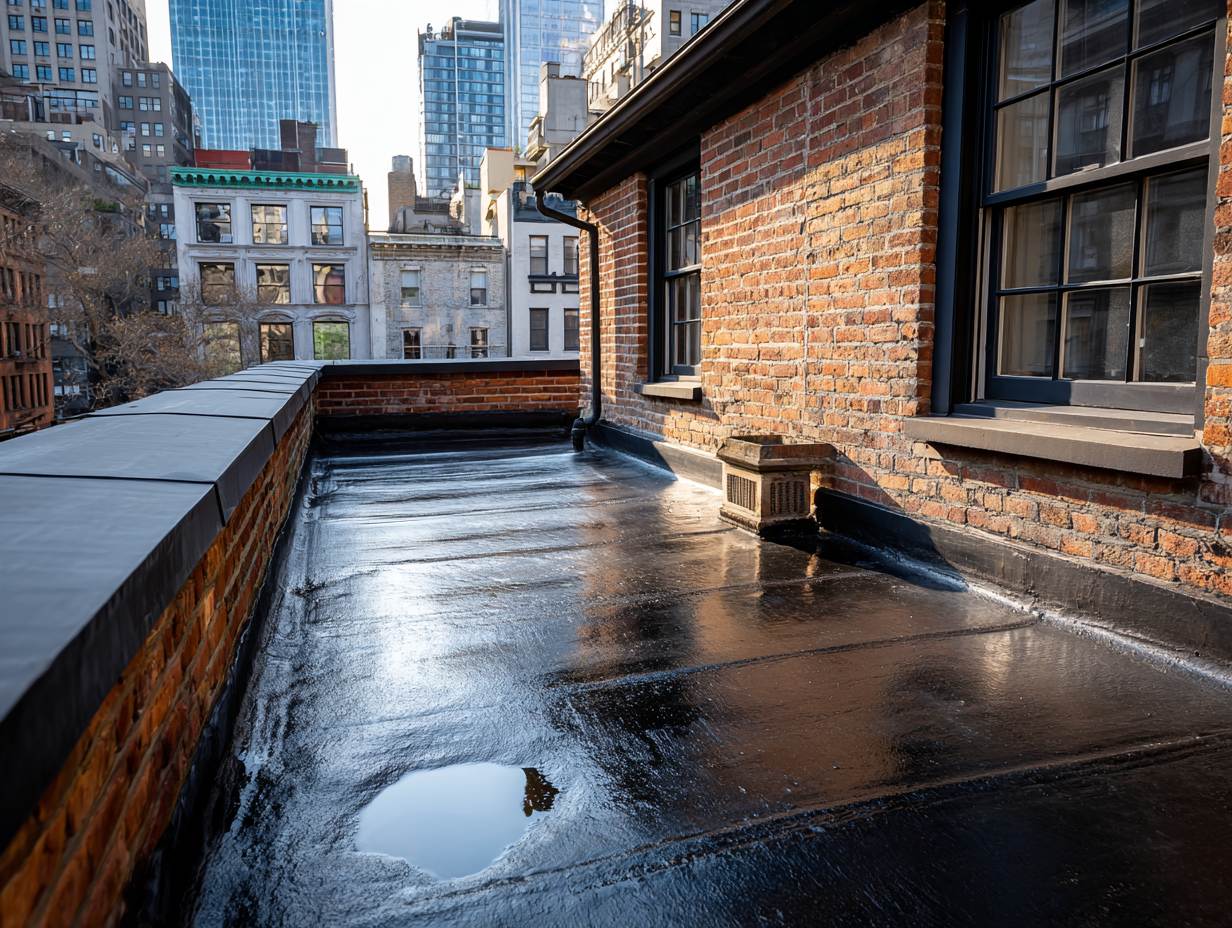
On an attached building with a flat roof, the middle of the roof is rarely where the water gets in. The edges are. Newark's rowhouses, attached two-families and small apartment buildings have parapet walls rising above the roof, party walls shared with the neighbors, and scuppers or drains cut through the wall to let water out. Each is a joint, and joints are where roofs leak. This guide explains the parts and how they fail, so the conversation with a roofer makes sense.
The Parts
| Part | What it is | How it leaks |
|---|---|---|
| Parapet wall | The short wall that rises above the roof line at the edges | Water soaks the masonry from the top and the roof side |
| Coping or cap | Metal, stone or brick on top of the parapet | Open joints let water run into the wall |
| Base flashing | The membrane turned up the inside of the parapet | Pulls away, cracks or was never turned up far enough |
| Counter-flashing | Metal set into the wall that laps over the base flashing | Comes loose from the mortar joint |
| Party wall | The wall shared with the next building | The seam between two roofs, two owners and two repair histories |
| Scupper | An opening through the parapet that drains the roof | Clogs, rusts or leaks at the edges of the opening |
How It Shows Up Inside
Parapet and party-wall leaks tend to appear in predictable places:
- a stain at the top of an outside wall, rather than in the middle of the ceiling
- peeling paint or plaster high on the wall shared with the neighbor
- water around a top-floor window below the parapet
- a leak that only happens in wind-driven rain
- efflorescence (white, chalky deposits) on brick near the top of the wall
If the stain is in the middle of the ceiling, the roof field or a penetration is a likelier cause. Near a wall, look at the parapet first.
Caps and Copings
The cap is meant to shed water off the top of the wall. Metal caps have joints every few feet, and when the sealant or the cleats at those joints fail, water runs straight into the wall. Stone and brick caps crack and lose mortar. A roofer may re-seal joints, re-secure or replace metal caps, or repoint and rebuild the top of the wall. A wall that has been soaking for years may need more than a cap.
Base Flashing and Counter-Flashing
Where the flat roof meets the parapet, the membrane is supposed to turn up the wall and be protected by counter-flashing above it. On many older Newark roofs, the turn-up is short, the counter-flashing has pulled out of the mortar, or both have been coated over with roofing cement so many times that nobody can see what's underneath. Re-doing the flashing properly usually fixes leaks that years of patching didn't.
Party Walls and Neighbors
A shared wall means a shared seam. The two roofs on either side may be different materials, different ages and different heights. When one owner re-roofs and the other doesn't, the joint between them can be done well or badly. It helps to:
- know where your roof ends and the neighbor's begins
- tell the roofer if the neighbor's roof drains onto yours
- talk to the neighbor before work on the shared wall, especially if the fix needs access to their side
- keep records of what was done on your side
Responsibility for a shared wall can depend on property lines, deeds and local rules. The roofer can describe the problem; who pays for what is between the owners.
Scuppers and Drains
Scuppers are openings through the parapet that let water off the roof, usually into a gutter or a conductor head and downspout. When they clog with leaves or the metal liner rusts through, water backs up against the parapet and finds its way into the wall. Keeping scuppers and drains clear before fall and winter is one of the cheapest roof jobs there is.
Questions
Why does my roof only leak in storms?
Wind-driven rain pushes water sideways into joints that stay dry in ordinary rain: parapet caps, counter-flashing and wall joints. A storm-only leak is a strong hint that the problem is at a wall, not the middle of the roof.
Does a parapet leak mean the whole wall needs work?
The flashing and cap are roofing work, and many roofing contractors also repair the top of the wall when it's part of the leak. Ask the roofer what they found and what the job includes.
Can I fix the cap myself?
Working on a parapet means working at the edge of a roof, which is dangerous. Leave it to a roofer.
Where This Matters Most
Attached homes fill the Ironbound, University Heights, Clinton Hill and East Orange. More on the roofs themselves: flat roofs and gutters, flashing & chimneys.
Flat Roof Materials Compared: EPDM, TPO and Modified Bitumen
The three common membranes, side by side.

Gutters and Downspouts on Attached Homes
Shared runs, shared problems, and where the water goes.